Rope Climb
Rope Climb demonstration
Watch the demo so setup and tempo are clear before you follow the step-by-step cues.
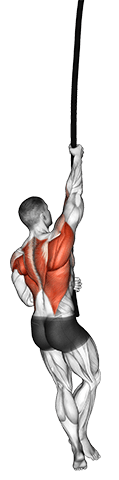
Performing the: A Step-by-Step Tutorial Rope Climb
Work through the cues in order so setup, bracing, and reps stay consistent before you add load.
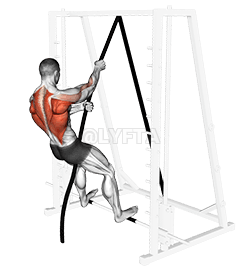
- Reach up and grab the rope with both hands, your dominant hand should be at the top. Both of your hands should be in an overhand grip (palms facing towards you).
- Pull your body up off the ground by using your arms, while simultaneously wrapping the rope around one of your legs and securing it with the other foot. This is known as the 'J' hook or 'S' wrap technique.
- Push off the ground with your feet and use your arms and legs to climb up the rope. Your arms pull you up while your legs and core help to push upwards.
- When you want to descend, do so slowly and under control, reversing the steps you took to climb up. Unwrap your legs and lower yourself using your arms, making sure to maintain a firm grip on the rope.
Tips for Performing Rope Climb
Form reminders that keep range of motion and control in check once the basic pattern feels stable.
- **Build Upper Body and Core Strength**: Rope climbing is a demanding exercise that requires significant upper body and core strength. If you're new to rope climbing, spend some time building up these areas with exercises like pull-ups, chin-ups, and planks before attempting to climb. A common mistake is to try to climb the rope without having adequate strength, which can lead to injury.
- **Wear Appropriate Gear**: To prevent rope burns and give you a better
Can beginners do the Rope Climb?
A short framing note on whether this pattern suits newer lifters before you load it heavily.
Yes, beginners can attempt the rope climb exercise, but it can be quite challenging as it requires significant upper body strength, grip strength, and technique. Beginners should start with easier exercises to build up their strength and gradually progress to rope climbing. It's also important to learn the proper technique to avoid injuries. It may be beneficial to have a trainer or experienced climber supervise the initial attempts. Always ensure safety measures are in place, such as crash mats beneath the rope.
What are common variations of the Rope Climb?
Compare these progressions when the main pattern is solid or you need a different stimulus with similar equipment.
- The L-Sit Rope Climb involves maintaining your legs in an L position while climbing, which adds an extra challenge for your core.
- The Spanish Rope Climb is a version where the rope is looped from the top, creating two strands to climb up, often using a unique technique involving wrapping legs around both strands.
- The Alternating Hand Rope Climb requires you to use only one hand at a time, alternating as you ascend, which increases the difficulty and tests your grip strength.
- The Plyometric Rope Climb is a dynamic variation where you explosively pull yourself up, let go of the rope briefly, then catch it again, demanding both strength and coordination.
Related Exercises
Similar library demos that share muscle or equipment focus so you can compare form cues and programming options.