Reverse grip Pull-up
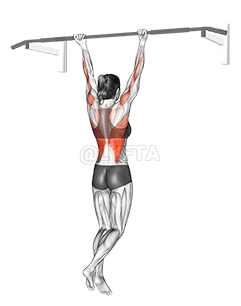
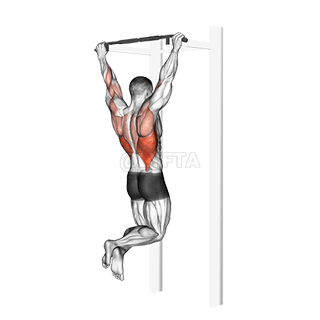
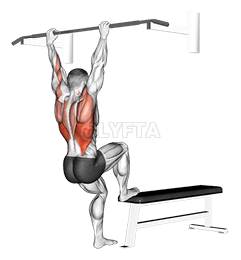
Reverse grip Pull-up demonstration
Watch the demo so setup and tempo are clear before you follow the step-by-step cues.
Performing the: A Step-by-Step Tutorial Reverse grip Pull-up
Work through the cues in order so setup, bracing, and reps stay consistent before you add load.
- With your arms fully extended, keep your shoulders back and your chest up, then pull yourself up until your chin is over the bar, focusing on squeezing your back muscles.
- Hold the position for a moment at the top of the movement, ensuring your core is engaged.
- Slowly lower yourself back down to the starting position, making sure to control your descent and not simply drop down.
- Repeat the exercise for the desired number of repetitions, ensuring to maintain proper form throughout.
Tips for Performing Reverse grip Pull-up
Form reminders that keep range of motion and control in check once the basic pattern feels stable.
- Engage Your Core: It's important to engage your core throughout the entire movement. This helps to stabilize your body and prevents unnecessary swinging. Some people forget to engage their core, which can lead to an improper form and potential injuries.
- Controlled Movement: Avoid rushing the movement. Instead, perform the exercise in a slow and controlled manner. This helps to engage your muscles effectively and reduces the risk of injury. A common mistake is to use momentum to pull yourself up, which can lead to shoulder and back injuries.
- Full Range of Motion: Make sure to perform the pull-up with a full range of motion. Start by fully extending your arms at the bottom
Can beginners do the Reverse grip Pull-up?
A short framing note on whether this pattern suits newer lifters before you load it heavily.
Yes, beginners can do the reverse grip pull-up exercise, but it may be challenging as it requires a fair amount of upper body strength. It's important to start slow and focus on proper form to avoid injury. If a beginner finds it too difficult, they can start with assisted pull-ups or negative pull-ups to build strength. As always, it's recommended to consult with a fitness professional to ensure exercises are being performed correctly.
What are common variations of the Reverse grip Pull-up?
Compare these progressions when the main pattern is solid or you need a different stimulus with similar equipment.
- The Mixed-Grip Pull-Up: This variation involves one hand in a supinated (underhand) grip and the other in a pronated (overhand) grip, which can help to improve grip strength and balance out muscle imbalances.
- The Commando Pull-Up: For this variation, you grip the bar with both hands facing each other (parallel grip), which is a great way to engage both the back and arm muscles simultaneously.
- The Wide-Grip Reverse Pull-Up: This variation involves a wider grip with your palms facing towards you, which targets the outer lats more effectively.
- The One-Arm Reverse Pull-Up: This advanced variation involves performing the exercise with only one arm, which significantly increases the intensity and focus on individual upper body strength.
Related Exercises
Similar library demos that share muscle or equipment focus so you can compare form cues and programming options.