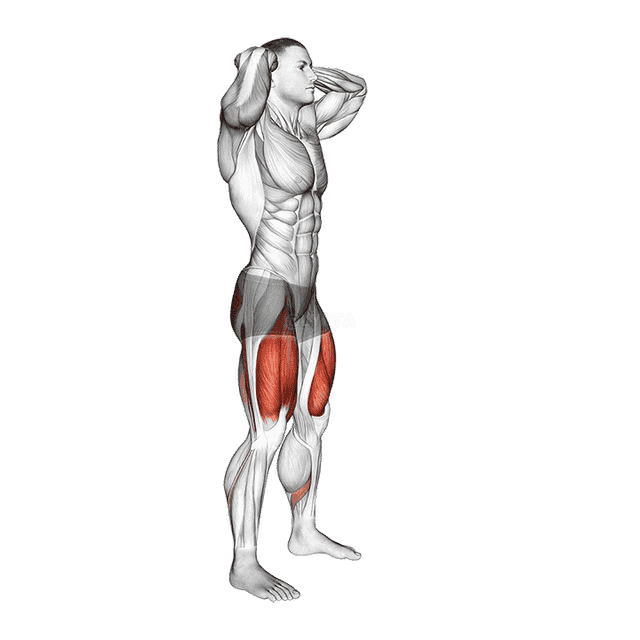
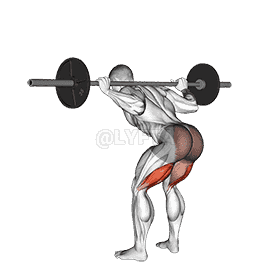
Resistance Band Lateral Walk
Resistance Band Lateral Walk demonstration
Performing the: A Step-by-Step Tutorial Resistance Band Lateral Walk
- Lower your body into a half-squat position to activate the glute muscles, keeping your back straight and your knees over your toes.
- Take a step to the right with your right foot, stretching the band, followed by the left foot moving towards the right foot, but keep them shoulder-width apart.
- Repeat this lateral movement for 10 to 15 steps, or as many as your space allows, then switch directions and walk to the left.
- Ensure your steps are controlled and deliberate, maintaining the half-squat position and keeping tension on the band throughout the exercise.
Tips for Performing Resistance Band Lateral Walk
- Proper Band Placement: The resistance band should be placed around your ankles or just above your knees. Placing the band too high can cause it to roll up during the exercise, and placing it too low can increase the risk of tripping or losing balance.
- Controlled Movements: When performing the lateral walk, ensure that your movements are slow and controlled. Avoid jerky or fast movements as they can cause the band to snap or your muscles to strain.
- Keep Tension in the Band: A common mistake is to let the band slacken during the exercise. To get the most out of the resistance band lateral walk, always keep tension in
Can beginners do the Resistance Band Lateral Walk?
Yes, beginners can certainly do the Resistance Band Lateral Walk exercise. It's a great way to work the muscles in your hips, glutes, and thighs. However, it's important to start with a band of appropriate resistance - not too tight or too loose - and to learn the correct form to avoid injury. It might be helpful to have a fitness trainer or experienced exercise partner supervise at first. As with any new exercise, beginners should start slowly and gradually increase the number of repetitions or sets as their strength and endurance improve.
What are common variations of the Resistance Band Lateral Walk?
- Resistance Band Diagonal Walk: This variation involves stepping diagonally, alternating between forward and backward steps, to engage different muscle groups.
- Resistance Band Monster Walk: In this version, you take exaggerated steps forward and outward, resembling a "monster" walk, to target your glutes and thighs.
- Resistance Band Squat Walk: With this variation, you maintain a squat position as you step side to side, increasing the intensity and focus on your lower body muscles.
- Resistance Band Lateral Jump: Instead of walking, you jump from side to side with the band around your ankles or thighs, adding a cardio element and working on your agility.