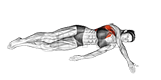
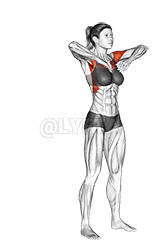
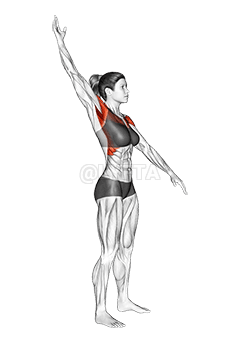
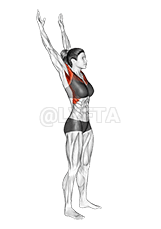
Lying Upper Body Rotation
Lying Upper Body Rotation demonstration
Watch the demo so setup and tempo are clear before you follow the step-by-step cues.
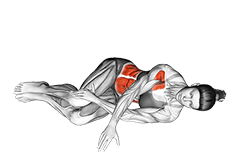
Performing the: A Step-by-Step Tutorial Lying Upper Body Rotation
Work through the cues in order so setup, bracing, and reps stay consistent before you add load.
- Bend your knees and keep your feet flat on the ground, hip-width apart.
- Extend your arms out to the sides in a 'T' shape with the palms facing down.
- Slowly rotate your knees to the right side until they touch the floor, while keeping your upper body and shoulders flat on the ground.
- Gradually bring your knees back to the center and repeat the movement on the left side. This completes one repetition.
Tips for Performing Lying Upper Body Rotation
Form reminders that keep range of motion and control in check once the basic pattern feels stable.
- Controlled Movement: When you start to rotate your upper body, make sure to do it in a slow and controlled manner. Avoid jerking or fast movements, as this could strain your neck or back. Keep your shoulders flat on the floor while rotating your knees to one side.
- Maintain Alignment: A common mistake is to allow the knees to drift apart during the rotation. Ensure that your knees remain together throughout the exercise to maintain proper alignment and to effectively target the intended muscles.
- Breathing Technique: Remember to breathe correctly throughout the exercise. Inhale as you bring your knees back to the center and exhale as you lower your knees
Can beginners do the Lying Upper Body Rotation?
A short framing note on whether this pattern suits newer lifters before you load it heavily.
Yes, beginners can do the Lying Upper Body Rotation exercise. It's a simple and effective exercise that helps to improve flexibility and mobility in the spine. However, like any other exercise, it's important to do it correctly to avoid injury. If you're a beginner, you might want to start with a smaller range of motion and gradually increase as you become more comfortable and flexible. Always remember to listen to your body and stop if you feel any discomfort or pain. It may also be beneficial to have a trainer or experienced person guide you through the exercise initially.
What are common variations of the Lying Upper Body Rotation?
Compare these progressions when the main pattern is solid or you need a different stimulus with similar equipment.
- The Standing Upper Body Rotation is performed by standing with feet hip-width apart, holding a medicine ball or dumbbell in front of the chest, and rotating the upper body from side to side.
- The Kneeling Upper Body Rotation involves kneeling on a mat, holding a medicine ball or dumbbell in front of the chest, and rotating the upper body from one side to the other.
- The Plank Upper Body Rotation is a more challenging variation that involves getting into a plank position, lifting one arm off the ground and rotating the upper body to the same side.
- The Russian Twist is a seated variation where you lean back slightly with your feet off the ground, holding a weight to your chest, and rotating your torso from side to side.
Related Exercises
Similar library demos that share muscle or equipment focus so you can compare form cues and programming options.