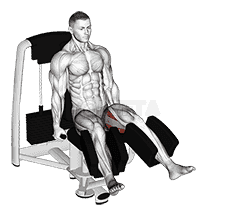
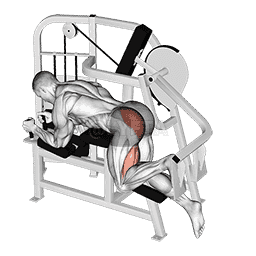
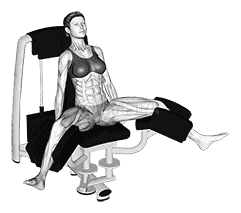
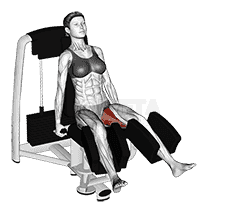
Lever Seated Hip Adduction
Lever Seated Hip Adduction demonstration
_Hips_small.png&w=3840&q=75)
Performing the: A Step-by-Step Tutorial Lever Seated Hip Adduction
- Adjust the machine's lever pads so that they are on the inside of your knees.
- Grip the handles on the sides of the machine for stability and slowly press your legs together against the resistance of the machine.
- Hold this position for a moment, ensuring your muscles are fully contracted.
- Slowly return your legs to the starting position, ensuring you control the movement to prevent injury. Repeat the exercise for your desired number of repetitions.
Tips for Performing Lever Seated Hip Adduction
- Controlled Movements: Avoid the temptation to use momentum or to perform the exercise too rapidly. Instead, focus on slow, controlled movements. This not only increases muscle engagement but also reduces the risk of injury.
- Appropriate Weight: Start with a lighter weight and gradually increase as your strength improves. Using too much weight can lead to improper form and potential injuries.
- Full Range of Motion: To get the most out of the Lever Seated Hip Adduction, make sure to go through a full range of motion. This means allowing your legs to spread as wide as comfortably possible, and then bringing them together until they slightly cross over the mid
Can beginners do the Lever Seated Hip Adduction?
Yes, beginners can do the Lever Seated Hip Adduction exercise. It's a machine-based exercise that targets the inner thigh muscles. However, it's important to start with a low weight to ensure proper form and prevent injury. It's also beneficial to have a trainer or experienced gym-goer demonstrate the exercise first to ensure it's done correctly. As with any exercise, if there's any discomfort or pain, it's important to stop and seek advice from a fitness professional.
What are common variations of the Lever Seated Hip Adduction?
- Resistance Band Hip Adduction: In this variation, you anchor a resistance band and wrap it around your ankle, then perform the hip adduction movement against the resistance of the band.
- Standing Hip Adduction: This variation involves standing up and moving your leg sideways against resistance, which could be provided by a resistance band, a cable machine, or a lever machine.
- Lying Hip Adduction: In this variation, you lie down on your side and lift your top leg upwards against gravity or additional resistance like ankle weights.
- Physioball Hip Adduction: This variation involves squeezing a physioball or similar object between your legs while either sitting, standing, or lying down.