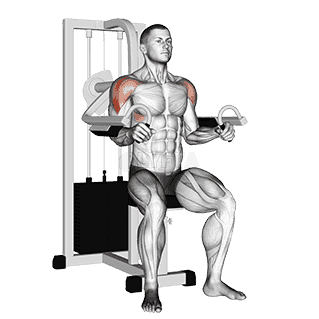
Lever Lateral Raise
Lever Lateral Raise demonstration
_Shoulder_small.png&w=3840&q=75)
Performing the: A Step-by-Step Tutorial Lever Lateral Raise
- Keep your back straight, and your feet shoulder-width apart. This will be your starting position.
- Keeping your arm straight, slowly raise the lever or dumbbell to the side until your arm is parallel with the ground. Ensure that the movement is controlled and that you are not swinging the weight.
- Pause for a moment at the top of the movement, then slowly lower the lever or dumbbell back to the starting position.
- Repeat these steps for the desired number of repetitions, then switch to the other arm.
Tips for Performing Lever Lateral Raise
- Weight Selection: Avoid using too much weight. It's a common misconception that using heavier weights will lead to faster muscle gain. However, using weights that are too heavy can lead to improper form and potential injury. Start with lighter weights and gradually increase as your strength improves.
- Elbow Position: Keep your elbows slightly bent during the exercise. This reduces the strain on your joints and focuses the workout on your shoulder muscles. Avoid locking your elbows as this can lead to injury.
- Controlled Movement: The Lever Lateral Raise should be performed in a slow, controlled manner. Avoid the temptation to rush through the exercise.
Can beginners do the Lever Lateral Raise?
Yes, beginners can perform the Lever Lateral Raise exercise. However, it's important to start with a low weight to ensure proper form and prevent injury. As with any new exercise, it's recommended to have a trainer or experienced individual demonstrate the exercise first. This can help beginners understand the correct form and technique, reducing the risk of injury.
What are common variations of the Lever Lateral Raise?
- Cable Lateral Raise: This variation uses a cable machine, which provides constant tension throughout the movement and can help to improve muscle endurance.
- Seated Lateral Raise: This variation is performed while seated, which can help to isolate the shoulder muscles and prevent using momentum to lift the weights.
- Bent-Over Lateral Raise: This variation targets the rear deltoids, as you are bent over while performing the exercise.
- One-Arm Lateral Raise: This variation is performed with one arm at a time, allowing for a greater focus on each individual shoulder and potentially identifying and correcting any muscle imbalances.