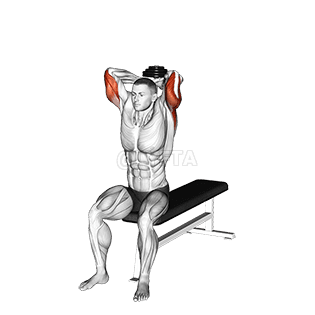
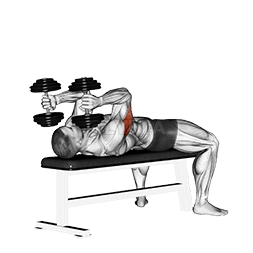
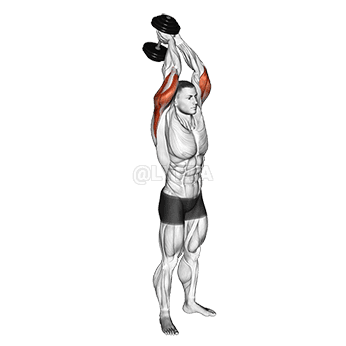
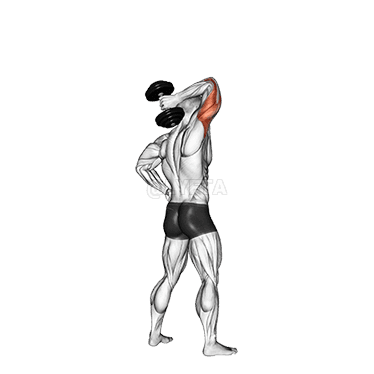
Kickback
Kickback demonstration
Watch the demo so setup and tempo are clear before you follow the step-by-step cues.
Performing the: A Step-by-Step Tutorial Kickback
Work through the cues in order so setup, bracing, and reps stay consistent before you add load.
- Bend forward slightly at the waist and bend your right elbow to a 90-degree angle, keeping your palm facing in and your upper arm close to your body.
- Push the dumbbell back by extending your elbow and allow it to slowly return after a short pause.
- Keep your upper arm still throughout the movement and focus on using your triceps to push the weight, not your forearm and wrist.
- Repeat this movement for your desired number of repetitions, then switch arms and do the same number with the left arm.
Tips for Performing Kickback
Form reminders that keep range of motion and control in check once the basic pattern feels stable.
- **Controlled Movements:** One common mistake is performing the exercise too quickly. Instead, focus on slow and controlled movements. This not only helps to better engage the muscles but also reduces the risk of injury.
- **Full Extension:** When you kick back, make sure your arm is fully extended. This ensures that your triceps are fully engaged. However, avoid locking your elbow at the top of the movement, as this can cause unnecessary strain.
- **Use Appropriate Weight:** Using weights that are too heavy can lead to improper form and potential injury. Start with lighter weights and gradually increase as your strength improves.
- **Keep El
Can beginners do the Kickback?
A short framing note on whether this pattern suits newer lifters before you load it heavily.
Yes, beginners can definitely do the Kickback exercise. It's a simple and effective exercise that targets the triceps. However, it's important to start with light weights to avoid injury and to ensure proper form. As with any exercise, it's recommended to have someone knowledgeable about exercise form, like a personal trainer, supervise beginners to ensure they are performing the exercise correctly.
What are common variations of the Kickback?
Compare these progressions when the main pattern is solid or you need a different stimulus with similar equipment.
- The Cable Kickback is another variation, where instead of using dumbbells, you use a cable machine for a more consistent resistance throughout the movement.
- The Single Arm Kickback is a modification where you focus on one arm at a time, allowing you to concentrate on the muscle isolation of each individual tricep.
- The Incline Kickback is performed on an incline bench, which changes the angle of the exercise and can help target different parts of the triceps muscle.
- The Resistance Band Kickback is a variation where you use a resistance band instead of a dumbbell, providing a different type of tension and resistance for the triceps.
Related Exercises
Similar library demos that share muscle or equipment focus so you can compare form cues and programming options.