Hip Raise
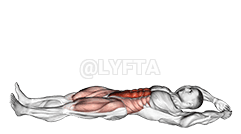
Hip Raise demonstration
Watch the demo so setup and tempo are clear before you follow the step-by-step cues.
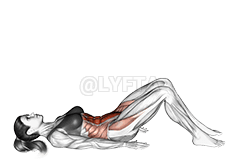
Performing the: A Step-by-Step Tutorial Hip Raise
Work through the cues in order so setup, bracing, and reps stay consistent before you add load.
- Place your arms at your sides with palms facing down for stability.
- Engage your core and push through your heels to lift your hips off the floor until your body forms a straight line from your shoulders to your knees.
- Hold this position for a few seconds, making sure to keep your core engaged and your back straight.
- Slowly lower your hips back to the starting position, and repeat the exercise for your desired number of repetitions.
Tips for Performing Hip Raise
Form reminders that keep range of motion and control in check once the basic pattern feels stable.
- Engage Your Core: Before you lift your hips off the ground, make sure to engage your core and squeeze your glutes. This will not only help you lift your hips higher but also protect your lower back from strain. A common mistake is to only use the strength of your lower back to lift your hips, which can lead to injury.
- Controlled Movement: Lift your hips by pushing through your heels until your body forms a straight line from your shoulders to your knees. Avoid the common mistake of lifting your hips too high, which can lead to hyperextension of the back. Also, make sure to lower your hips back down with control, rather than letting them drop suddenly
Can beginners do the Hip Raise?
A short framing note on whether this pattern suits newer lifters before you load it heavily.
Yes, beginners can certainly do the Hip Raise exercise. It's a great exercise to strengthen the glutes, hamstrings, and lower back. However, like with any exercise, it's important to start with a weight that is comfortable and to focus on proper form to prevent injury. It may also be helpful for beginners to start doing the exercise without any weight to get used to the movement.
What are common variations of the Hip Raise?
Compare these progressions when the main pattern is solid or you need a different stimulus with similar equipment.
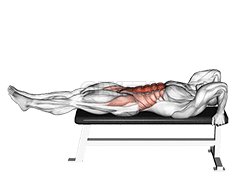
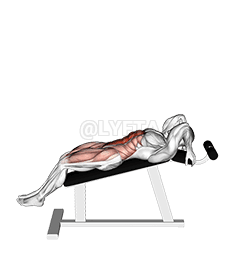
- Weighted Hip Raise: In this variation, you place a weight on your lower abdomen while performing the hip raise, which increases the resistance and the strength needed.
- Swiss Ball Hip Raise: Instead of raising your hips from the floor, you raise them from a Swiss ball, which increases the challenge to your balance and core stability.
- Banded Hip Raise: In this variation, you place a resistance band around your knees and perform the hip raise, which adds an element of lateral resistance and works your gluteus medius.
- Hip Raise with a Twist: This variation involves twisting your hips to one side at the top of the raise, which adds an oblique challenge to the exercise.
Related Exercises
Similar library demos that share muscle or equipment focus so you can compare form cues and programming options.