Dumbbell Seated Lateral Raise
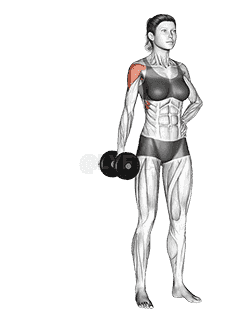
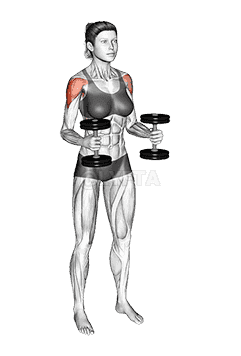
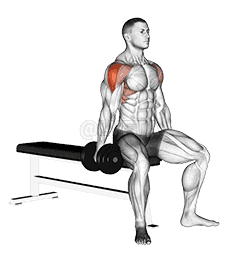
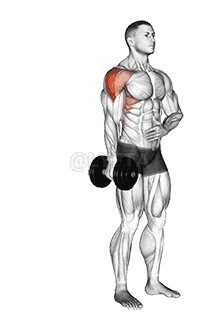
Dumbbell Seated Lateral Raise demonstration
Performing the: A Step-by-Step Tutorial Dumbbell Seated Lateral Raise
- Keep your elbows slightly bent and your arms at your sides.
- Slowly lift the dumbbells out to your sides, keeping your elbows and hands moving together in a smooth, controlled motion until they reach shoulder level.
- Pause for a moment at the top of the movement, then slowly lower the dumbbells back to the starting position.
- Repeat this process for your desired number of repetitions, ensuring to maintain control of the dumbbells throughout the entire movement.
Tips for Performing Dumbbell Seated Lateral Raise
- Control the Movement: Avoid swinging the weights or using momentum to lift them. The movement should be slow and controlled, both when lifting and lowering the dumbbells. This ensures that the target muscles are fully engaged and reduces the risk of injury.
- Correct Arm Position: Your arms should be slightly bent at the elbows, not completely straight. This reduces strain on the elbow joints. Also, avoid raising the weights above shoulder height. The dumbbells should be lifted to the sides until they're in line with your shoulders.
- Keep Your Focus: Your focus should be on the lateral deltoids, which are the target muscles in this exercise. Avoid shrugging your shoulders or using your back or neck muscles to lift the weights.
- Choose App
Can beginners do the Dumbbell Seated Lateral Raise?
Yes, beginners can certainly do the Dumbbell Seated Lateral Raise exercise. However, it's important to use a weight that is appropriate for your fitness level and to maintain proper form throughout the exercise to avoid injury. It's recommended to start with light weights and gradually increase as your strength and endurance improve. You may also want to seek guidance from a fitness professional or trainer when starting out to ensure you are performing the exercise correctly.
What are common variations of the Dumbbell Seated Lateral Raise?
- Dumbbell Bent-Over Lateral Raise: In this variation, you bend over at the waist, allowing you to target the rear deltoids instead of the side deltoids.
- Dumbbell Lying Lateral Raise: This variation is performed while lying on your side on a bench, which can help isolate the shoulder muscles and reduce the involvement of other muscle groups.
- Single-Arm Dumbbell Seated Lateral Raise: This variation involves performing the exercise with one arm at a time, which can help address any muscle imbalances.
- Dumbbell Seated Lateral Raise with Rotation: This variation involves rotating your wrists as you lift the weights, which can help engage more of the shoulder muscles.