Skip to content

Dumbbell Seated Kickback

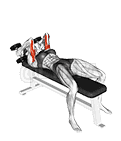
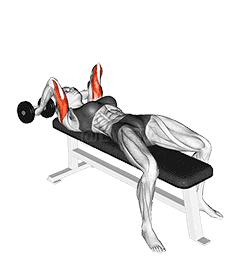
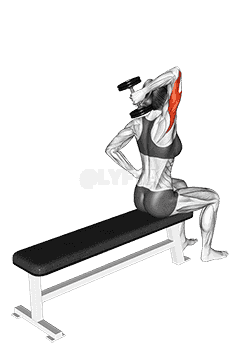
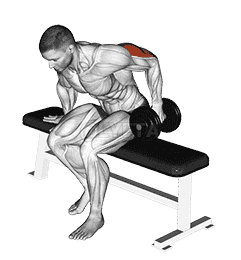
Dumbbell Seated Kickback demonstration

Dumbbell Seated Kickback exercise demonstration for Triceps, and Upper Arms, Dumbbell

Performing the: A Step-by-Step Tutorial Dumbbell Seated Kickback

  • Bend forward slightly at the waist, keeping your back straight, and bring your elbows up so that your upper arms are parallel to the floor and your forearms are hanging down vertically.
  • Slowly extend your arms backward until they are straight and parallel to the floor while keeping your upper arms still, this is the 'kickback' part of the exercise.
  • Hold this position for a second, feeling the contraction in your triceps.
  • Slowly lower the dumbbells back to the starting position and repeat the exercise for your desired number of repetitions.

Tips for Performing Dumbbell Seated Kickback

  • Arm Position: Hold a dumbbell in each hand and bend your elbows to a 90-degree angle, keeping your upper arms close to your body. Avoid letting your elbows flare out to the sides, as this can lead to injury and will not target your triceps as effectively.
  • Controlled Movement: As you extend your arms back, make sure the movement is controlled and steady. Avoid the common mistake of using momentum to lift the weights, as this can result in injury and will not effectively work your muscles. Instead, focus on engaging your triceps and slowly lifting the weights.

Can beginners do the Dumbbell Seated Kickback?

Yes, beginners can do the Dumbbell Seated Kickback exercise. However, it's important to start with a lighter weight to ensure proper form and to prevent injury. It's also recommended to have a trainer or experienced individual demonstrate the exercise first to ensure you understand the correct movements. As with any new exercise, beginners should take it slow and gradually increase weight and repetitions as their strength improves.

What are common variations of the Dumbbell Seated Kickback?

  • One-Arm Dumbbell Kickback: You only use one arm at a time in this variation, allowing you to focus on each tricep individually.
  • Incline Bench Dumbbell Kickback: This variation is performed on an incline bench, which changes the angle of the exercise and targets different parts of your triceps.
  • Bent-Over Dumbbell Kickback: This variation is performed while bending over, which engages your core and helps improve balance and stability.
  • Dumbbell Kickback with Resistance Bands: This variation incorporates resistance bands to increase the intensity of the workout and further challenge your triceps.