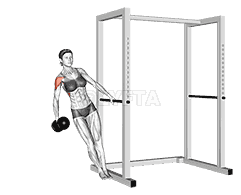
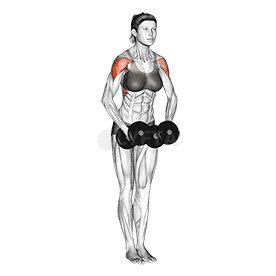
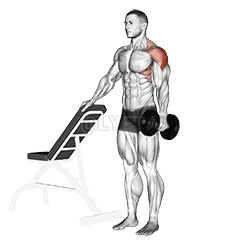
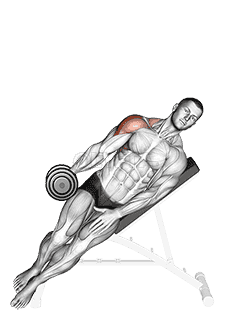
Dumbbell Seated Bent Arm Lateral raise
Dumbbell Seated Bent Arm Lateral raise demonstration
Performing the: A Step-by-Step Tutorial Dumbbell Seated Bent Arm Lateral raise
- Bend your elbows at a 90-degree angle, so the dumbbells are parallel to the floor.
- Keeping your back straight and your elbows slightly bent, lift the weights out to the sides until they are at shoulder level.
- Pause for a moment at the top of the movement to ensure maximum muscle contraction.
- Slowly lower the dumbbells back to the starting position, maintaining control of the weights throughout the movement.
Tips for Performing Dumbbell Seated Bent Arm Lateral raise
- Appropriate Weight: Choose a weight that is challenging but manageable. It's a common mistake to use too heavy dumbbells which can lead to incorrect form and potential injuries. It's better to start with a lighter weight and gradually increase as your strength improves.
- Controlled Movement: Avoid the mistake of performing the exercise too quickly. The movement should be slow and controlled, both when you raise and lower the dumbbells. This ensures that your muscles are fully engaged throughout the exercise, making it more effective.
- Range of Motion: Lift the dumbbells to shoulder height, keeping your elbows slightly bent. Avoid lifting the weights too high or locking your elbows as this can put unnecessary strain on your shoulder joints
Can beginners do the Dumbbell Seated Bent Arm Lateral raise?
Yes, beginners can definitely do the Dumbbell Seated Bent Arm Lateral Raise exercise. However, it's important to start with a weight that is manageable and doesn't strain the muscles excessively. Proper form is crucial in this exercise to avoid injury, so beginners might benefit from supervision or guidance from a trainer. As with any new exercise, it should be incorporated gradually into a workout routine.
What are common variations of the Dumbbell Seated Bent Arm Lateral raise?
- Dumbbell Seated Straight Arm Lateral Raise: In this variation, you perform the exercise with your arms straight, which places more emphasis on the deltoid muscles.
- Dumbbell Incline Bench Lateral Raise: This variation is performed on an incline bench, which changes the angle of the exercise and targets different parts of the shoulder muscles.
- Dumbbell Lying Side Lateral Raise: In this variation, you lie on your side on a flat bench and perform the lateral raise, which can help isolate the shoulder muscles more effectively.
- Dumbbell Bent Over Lateral Raise: This variation is performed bending over, which targets the rear deltoids and upper back muscles.