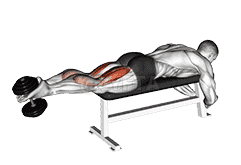
Dumbbell Lying Femoral
Dumbbell Lying Femoral demonstration
Performing the: A Step-by-Step Tutorial Dumbbell Lying Femoral
- Bend your knees and bring them towards your chest, keeping your feet together and your lower back pressed against the bench.
- Slowly lower the dumbbells towards your thighs, keeping your arms straight and your palms facing inward.
- Once the dumbbells reach your thighs, pause for a moment, then lift them back up to the starting position using your hip and thigh muscles.
- Repeat this movement for the desired number of repetitions, making sure to keep your movements controlled and your muscles engaged throughout.
Tips for Performing Dumbbell Lying Femoral
- Controlled Movement: Avoid the temptation to use momentum to lift the weight. Instead, focus on a slow, controlled movement where you lift the weight using your hamstrings and lower it back down slowly. This will ensure that your muscles are working throughout the exercise and will help to prevent injury.
- Avoid Hyperextension: A common mistake is hyperextending the knees at the top of the movement. This can lead to injury. Instead, keep a slight bend in your knees at all times to protect them.
- Mind-Muscle Connection: To get the most out of this exercise, focus on the mind-muscle connection. Concent
Can beginners do the Dumbbell Lying Femoral?
Yes, beginners can certainly do the Dumbbell Lying Femoral exercise, also known as the Dumbbell Lying Leg Curl. However, it's important to start with a light weight to ensure proper form and technique, and to avoid injury. It's also recommended to have a trainer or experienced individual demonstrate the exercise first, to ensure you understand the correct movements. As with any exercise, it's crucial to warm up before starting and cool down afterwards.
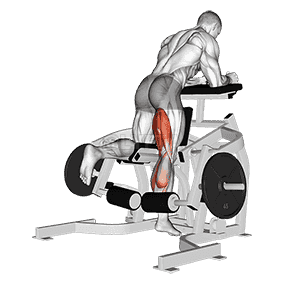
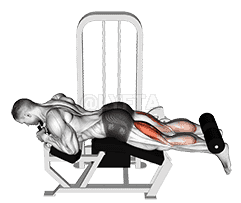
What are common variations of the Dumbbell Lying Femoral?
- The Resistance Band Lying Femoral Curl involves using a resistance band secured around your ankles, offering adjustable resistance and a full range of motion.
- The Cable Lying Femoral Curl requires a cable machine, allowing you to adjust the weight more precisely and providing constant tension throughout the exercise.
- The Stability Ball Lying Femoral Curl uses a stability ball instead of a dumbbell, which can also engage your core and improve balance.
- The Ankle Weight Lying Femoral Curl is another variation where you strap weights around your ankles, which can be more comfortable and allow for a greater range of motion.