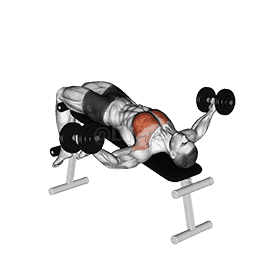
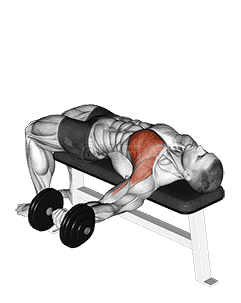
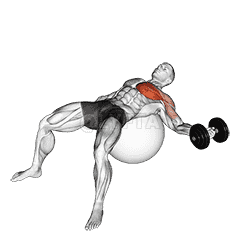
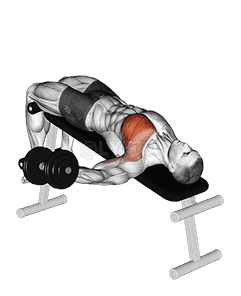
Dumbbell Decline Fly
Dumbbell Decline Fly demonstration
Performing the: A Step-by-Step Tutorial Dumbbell Decline Fly
- Extend your arms above your chest, but remember to keep a slight bend at the elbows to avoid strain.
- Slowly lower the weights in a wide arc until they are level with your chest, keeping your elbows fixed at the same slight angle.
- Pause for a moment and then raise the dumbbells back to the starting position, using your chest muscles to drive the movement.
- Repeat this process for your desired number of repetitions, ensuring to maintain the correct form throughout.
Tips for Performing Dumbbell Decline Fly
- Controlled Motion: When performing the Dumbbell Decline Fly, use slow and controlled movements. Avoid the common mistake of using momentum to lift the weights. The slower and more controlled your movements are, the more you will engage your muscles, leading to better results.
- Correct Arm Position: Your arms should be slightly bent at the elbows, not locked straight. This will prevent any strain or injury to your elbow joints. Also, ensure that your arms are parallel to the floor at the bottom of the movement. Avoid letting your arms go below your shoulders as this can cause shoulder injury.
- Right Weight: Choose a weight that allows you to perform the exercise with correct form. Using a weight that is too
Can beginners do the Dumbbell Decline Fly?
Yes, beginners can do the Dumbbell Decline Fly exercise. However, it's important to start with a light weight until you become comfortable with the movement. This exercise targets the chest muscles and should be done with proper form to avoid injury. It's also recommended to have a spotter nearby if you're new to this exercise. If you're unsure about how to perform this exercise, consider hiring a personal trainer or asking a knowledgeable gym staff member for assistance.
What are common variations of the Dumbbell Decline Fly?
- Flat Bench Dumbbell Fly: This variation is performed on a flat bench and targets the middle part of your chest muscles.
- Standing Dumbbell Fly: Instead of lying down, you perform this exercise in a standing position, which engages your core and improves balance.
- Single-arm Dumbbell Fly: This variation is performed by using one arm at a time, which helps to isolate and focus on each side of your chest independently.
- Swiss Ball Dumbbell Fly: This variation is performed on a Swiss ball, which adds an element of instability and works on your core muscles along with your chest.