Control Balance
Control Balance demonstration
Watch the demo so setup and tempo are clear before you follow the step-by-step cues.
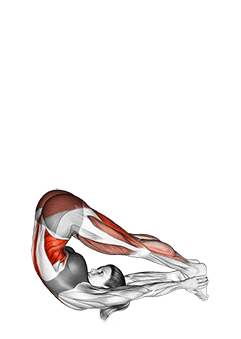
Performing the: A Step-by-Step Tutorial Control Balance
Work through the cues in order so setup, bracing, and reps stay consistent before you add load.
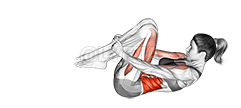
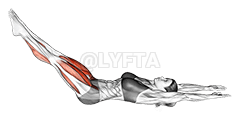
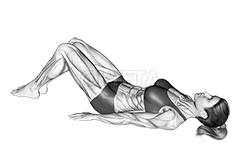
- Next, engage your core and lift your hips off the floor, bringing your legs over your head while keeping them straight and together.
- Extend your arms straight up towards the ceiling as you balance your body weight on your upper back and shoulders.
- Slowly lower one leg towards the mat while keeping the other leg over your head, then switch legs, maintaining control and balance throughout the movement.
- Finally, lower both legs back over your head, roll your spine down to the mat one vertebra at a time, and return to the starting position. Repeat this exercise for the desired number of repetitions.
Tips for Performing Control Balance
Form reminders that keep range of motion and control in check once the basic pattern feels stable.
- Engage Your Core: The Control Balance is a core-intensive exercise. Therefore, it's crucial to engage your core muscles throughout the exercise. Not doing so can lead to back injuries. To engage your core, imagine pulling your belly button towards your spine.
- Control Your Movement: As the name suggests, control is a key aspect of the Control Balance. Avoid making sudden or jerky movements, which can lead to injuries. Instead, focus on making slow, controlled movements, which will help to improve your balance and stability.
- Don't Rush: It's not about how fast you can complete the exercise, but rather the quality of your movement. Take your time to perform each movement
Can beginners do the Control Balance?
A short framing note on whether this pattern suits newer lifters before you load it heavily.
Control Balance is a Pilates exercise that is considered quite advanced. It requires a high level of strength, flexibility, and balance. Therefore, it is not typically recommended for beginners. Beginners should start with simpler exercises and gradually build up their strength and flexibility before attempting more advanced exercises like Control Balance. However, with proper guidance and gradual progression, a beginner could eventually be capable of performing this exercise. Always remember to consult with a fitness professional to ensure exercises are done correctly and safely.
What are common variations of the Control Balance?
Compare these progressions when the main pattern is solid or you need a different stimulus with similar equipment.
- Another variation is the Single Leg Control Balance, where only one leg is extended and lifted, focusing more on unilateral strength and balance.
- The Control Balance with Magic Circle involves using a Pilates ring to add resistance and challenge the core even more.
- The Control Balance with Ball introduces an unstable surface to the exercise, increasing the demand on balance and core control.
- Lastly, the Control Balance with Rotation incorporates a twist in the movement, challenging the obliques and adding a new dimension to the exercise.
Related Exercises
Similar library demos that share muscle or equipment focus so you can compare form cues and programming options.