Cocoons
Cocoons demonstration
Watch the demo so setup and tempo are clear before you follow the step-by-step cues.
Performing the: A Step-by-Step Tutorial Cocoons
Work through the cues in order so setup, bracing, and reps stay consistent before you add load.
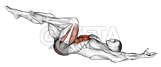
- Raise both your legs and your upper body at the same time, bending your knees towards your chest while bringing your arms forward to hug your knees.
- Hold this position for a few seconds, making sure to engage your core muscles.
- Slowly lower your legs and upper body back down to the starting position, extending your arms back to your sides.
- Repeat this exercise for the desired number of repetitions, maintaining a controlled movement throughout.
Tips for Performing Cocoons
Form reminders that keep range of motion and control in check once the basic pattern feels stable.
- Correct Form: The most important aspect to consider while performing cocoons is maintaining the correct form. Start by lying flat on your back with your legs extended and your arms extended overhead. Bring your knees towards your chest and your arms forward, curling your body inwards. Extend back out to the starting position. This makes one rep.
- Controlled Movement: Avoid rushing through the movements. Instead, make sure each movement is slow and controlled. This will help to engage your core muscles more effectively and reduce the risk of injury.
- Breathing: Breathe out as you curl your body inwards and breathe in as you return to the starting position. Proper breathing is often overlooked but is crucial for getting the most out of this exercise.
- Avoid Straining Your Neck: A common mistake is to strain your neck during this exercise.
Can beginners do the Cocoons?
A short framing note on whether this pattern suits newer lifters before you load it heavily.
Yes, beginners can do the Cocoons exercise. It is a fairly simple exercise that focuses on the core muscles. However, as with any new exercise, it's recommended to start slowly and gradually increase repetitions as strength and endurance improve. If any discomfort or pain is experienced, it's best to stop and seek advice from a fitness professional. Always remember proper form and technique to prevent injuries.
What are common variations of the Cocoons?
Compare these progressions when the main pattern is solid or you need a different stimulus with similar equipment.
- The "Hive" is another version of the Cocoon, featuring a more hexagonal design that is inspired by the structures built by bees.
- The "Pod" is a Cocoon variation that prioritizes privacy and seclusion, often designed with a singular entrance and exit.
- The "Capsule" is a compact, streamlined version of the Cocoon, perfect for urban environments where space is limited.
- The "Nest" is a Cocoon variant that incorporates natural materials and organic shapes for a more rustic and earthy feel.
Related Exercises
Similar library demos that share muscle or equipment focus so you can compare form cues and programming options.