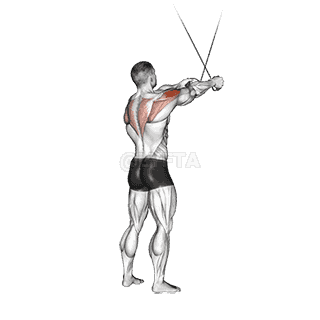
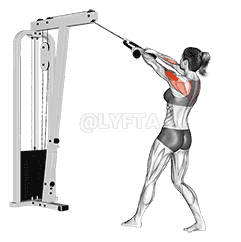
Cable Seated Rear Delt Fly with Chest Support
Cable Seated Rear Delt Fly with Chest Support demonstration
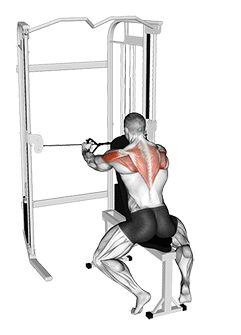
Performing the: A Step-by-Step Tutorial Cable Seated Rear Delt Fly with Chest Support
- Reach out and grab the handles with your palms facing each other, ensuring that your arms are fully extended and parallel to the floor.
- Slowly pull the handles back and out to your sides, squeezing your shoulder blades together and keeping your arms slightly bent.
- Hold this position for a brief moment to maximize the tension in your rear deltoids.
- Gradually return the handles to the starting position, making sure to control the movement and not letting the weights just drop back. Repeat the exercise for the desired number of repetitions.
Tips for Performing Cable Seated Rear Delt Fly with Chest Support
- Proper Grip: Hold the cables with a neutral grip (palms facing each other). This is the most effective grip for targeting the rear deltoids. Avoid using a grip that's too tight as it can strain your wrists and forearms, taking the focus away from your shoulders.
- Controlled Movement: Move your arms in a controlled, slow manner as you perform the fly movement. Avoid using momentum or fast, jerky movements, which can lead to injury and won't effectively target the muscles.
- Full Range of Motion: Make sure to fully extend your arms out to the sides and squeeze your shoulder blades together at the peak of the movement. Then, slowly return to the starting position. Avoid half-reps as they don't fully engage the rear
Can beginners do the Cable Seated Rear Delt Fly with Chest Support?
Yes, beginners can do the Cable Seated Rear Delt Fly with Chest Support exercise. However, it's important to start with a low weight to ensure proper form and prevent injury. It's also beneficial to have a personal trainer or fitness professional demonstrate the exercise first to ensure you're doing it correctly. As with any exercise, it's important to warm up properly and stretch before starting.
What are common variations of the Cable Seated Rear Delt Fly with Chest Support?
- Machine Rear Delt Fly: This variation uses a specialized machine designed to isolate and work the rear deltoids, providing support and stability.
- Standing Cable Rear Delt Fly: This variation is performed standing up, which can engage different muscle groups and enhance balance and core stability.
- Incline Bench Rear Delt Fly: This variation is performed on an incline bench, which changes the angle of the exercise and can help target the rear deltoids from a different perspective.
- Resistance Band Seated Rear Delt Fly: This variation uses resistance bands instead of cables or weights, offering variable resistance and the ability to perform the exercise virtually anywhere.