Cable Forward Lunge
Cable Forward Lunge demonstration
Watch the demo so setup and tempo are clear before you follow the step-by-step cues.
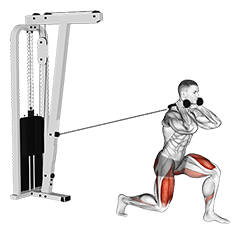
Performing the: A Step-by-Step Tutorial Cable Forward Lunge
Work through the cues in order so setup, bracing, and reps stay consistent before you add load.
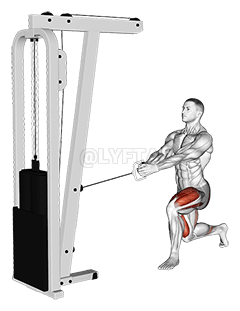
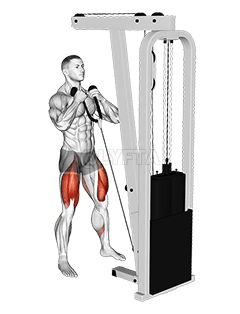
- Grasp the cable handle with both hands, keeping your arms extended and your back straight.
- Take a step forward with your right foot, bending both knees to lower your body into a lunge position, while keeping your arms extended and the cable handle in front of you.
- Push through your right heel to return to the starting position, maintaining your grip on the cable handle and keeping your arms extended.
- Repeat this process with your left leg, alternating legs for the desired number of repetitions.
Tips for Performing Cable Forward Lunge
Form reminders that keep range of motion and control in check once the basic pattern feels stable.
- **Correct Form**: Keep your chest upright and your core engaged throughout the exercise. When lunging forward, make sure your knee does not extend beyond your toes. This common mistake can lead to knee injuries. Instead, aim for a 90-degree angle in both your front and back knee.
- **Controlled Movement**: Avoid rushing the movement. Perform the lunge in a slow and controlled manner, focusing on the muscle contraction and not on the weights. Jerky or rapid movements can lead to injury and less effective muscle engagement.
- **Balanced Weight**: It's a common mistake to put too much weight on the cable machine. Start with a lighter weight to ensure you can perform the exercise with proper form. Once you
Can beginners do the Cable Forward Lunge?
A short framing note on whether this pattern suits newer lifters before you load it heavily.
Yes, beginners can do the Cable Forward Lunge exercise. However, it's important to start with a light weight to ensure proper form and technique. It's also recommended to have a trainer or experienced individual demonstrate the exercise first to avoid any potential injuries. If any discomfort or pain is experienced, it's best to stop the exercise and consult with a fitness professional.
What are common variations of the Cable Forward Lunge?
Compare these progressions when the main pattern is solid or you need a different stimulus with similar equipment.
- Barbell Forward Lunge: Instead of using a cable, this variation uses a barbell placed on your shoulders, increasing the challenge to your balance and core stability.
- Forward Lunge with Twist: This variation adds a torso twist at the bottom of the lunge, engaging the core more and adding a rotational element to the exercise.
- Walking Forward Lunge: This variation involves lunging forward and then stepping directly into the next lunge, creating a walking motion and increasing cardiovascular demand.
- Forward Lunge with Resistance Bands: This variation replaces the cable with resistance bands, which can be adjusted to provide varying levels of resistance and challenge.
Related Exercises
Similar library demos that share muscle or equipment focus so you can compare form cues and programming options.