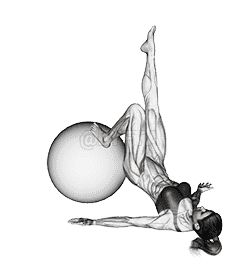
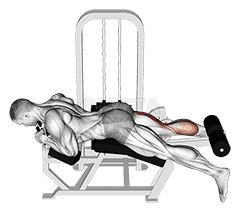
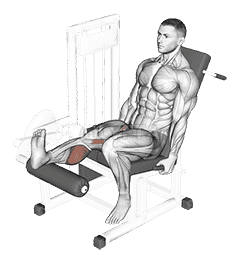
Cable Assisted Inverse Leg Curl
Cable Assisted Inverse Leg Curl demonstration
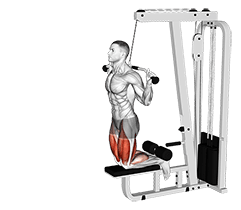
Performing the: A Step-by-Step Tutorial Cable Assisted Inverse Leg Curl
- Stand facing the machine, step back a few feet, and balance on the leg that isn't attached to the cable.
- Slowly bend the knee of the leg attached to the cable, pulling your heel towards your buttocks against the resistance of the cable.
- Pause briefly at the top of the movement, contracting your hamstring muscles.
- Slowly return your leg to the starting position, ensuring a controlled movement, then repeat the exercise for the desired number of repetitions.
Tips for Performing Cable Assisted Inverse Leg Curl
- Control the Movement: Avoid rushing through the exercise. The key to getting the most out of the Cable Assisted Inverse Leg Curl is to control the movement. Slowly curl your leg towards your glutes, hold for a moment, then slowly return to the starting position. Quick, jerky movements can lead to injury and won't effectively target the desired muscles.
- Maintain a Straight Posture: Keep your back straight and your core engaged throughout the exercise. Leaning forward or backward can put unnecessary strain on your lower back and reduce the effectiveness of the exercise.
- Don't Overextend: A common mistake to avoid is overextending the knee during the extension phase of
Can beginners do the Cable Assisted Inverse Leg Curl?
Yes, beginners can do the Cable Assisted Inverse Leg Curl exercise. However, it's important to start with a lighter weight to ensure proper form and technique, and to prevent injury. It's also beneficial to have a trainer or experienced gym-goer supervise the first few attempts to ensure the exercise is being done correctly. As with any new exercise, beginners should listen to their bodies and not push too hard too soon.
What are common variations of the Cable Assisted Inverse Leg Curl?
- Glute Ham Raise: This alternative focuses more on the glutes and hamstrings, with the individual using a glute ham developer machine to perform the exercise.
- Swiss Ball Hamstring Curl: Similar to the stability ball curl, but this variation uses a Swiss ball, which is smaller and allows for a greater range of motion.
- Sliding Disc Hamstring Curl: This variation involves the use of sliding discs or towels on a smooth surface, providing a challenging workout for the hamstrings.
- TRX Hamstring Curl: This variation uses suspension straps, which allows for a greater range of motion and engages the core and stabilizer muscles more intensively.