Barbell Lunge
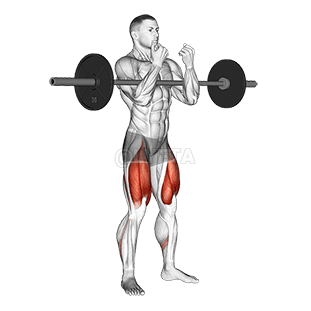
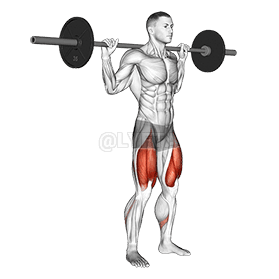
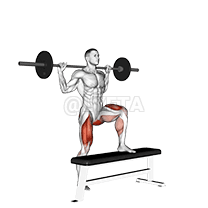
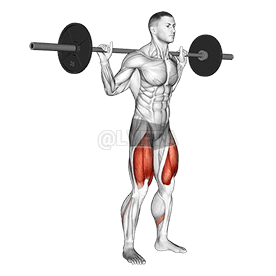
Barbell Lunge demonstration
Watch the demo so setup and tempo are clear before you follow the step-by-step cues.
Performing the: A Step-by-Step Tutorial Barbell Lunge
Work through the cues in order so setup, bracing, and reps stay consistent before you add load.
- Take a big step forward with your right foot, keeping your core engaged and your spine straight.
- Lower your body until your right knee is bent at a 90-degree angle, and your left knee is hovering just above the floor. Ensure that your right knee is directly above your right ankle.
- Push off your right foot to return to the starting position, keeping your weight in your heels.
- Repeat the movement with your left foot, alternating legs for the desired number of repetitions.
Tips for Performing Barbell Lunge
Form reminders that keep range of motion and control in check once the basic pattern feels stable.
- Appropriate Weight: Use a weight that is challenging but manageable. A common mistake is to use too much weight, which can lead to improper form and potential injuries. Start with a lighter weight and gradually increase as your strength and form improve.
- Control Your Movement: Avoid rushing through the exercise. It's better to perform each lunge slowly and with control, rather than trying to do as many as possible in a short amount of time. This ensures that your muscles are fully engaged and reduces the risk of injury.
- Warm Up: Before starting the exercise,
Can beginners do the Barbell Lunge?
A short framing note on whether this pattern suits newer lifters before you load it heavily.
Yes, beginners can do the Barbell Lunge exercise. However, it's important to start with lighter weights to ensure correct form and prevent injury. It's also recommended to have a trainer or experienced individual supervise or guide you through the exercise initially. As you become more comfortable and your strength improves, you can gradually increase the weight.
What are common variations of the Barbell Lunge?
Compare these progressions when the main pattern is solid or you need a different stimulus with similar equipment.
- Walking Lunge: In this variation, you perform a lunge and then step forward into the next lunge, effectively walking forward.
- Reverse Barbell Lunge: This is a lunge where you step backward instead of forward, which can help focus more on the glutes and hamstrings.
- Side Lunge with Barbell: Instead of lunging forward, you lunge to the side, which can help work the inner and outer thighs.
- Overhead Barbell Lunge: In this variation, you hold the barbell overhead while performing the lunge, which can help engage your core and improve balance.
Related Exercises
Similar library demos that share muscle or equipment focus so you can compare form cues and programming options.