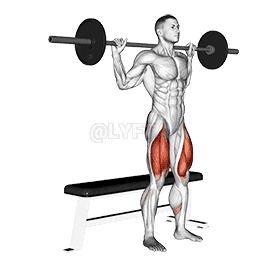
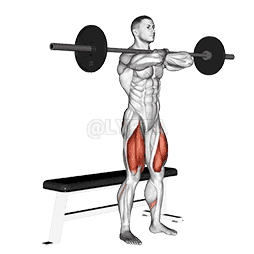
Barbell Bench Squat
Barbell Bench Squat demonstration
Performing the: A Step-by-Step Tutorial Barbell Bench Squat
- Start by setting up your barbell on the squat rack at about chest height.
- Stand facing the barbell, move under it and position it across your upper back, slightly below the neck.
- Grasp the barbell with your hands wider than shoulder-width apart, lift it off the rack by straightening your legs, and step back from the rack.
- Stand with your feet shoulder-width apart, toes slightly pointed out. This is your starting position.
- Bend at your hips and knees to lower your body as far as you can (aim for thighs being parallel to the floor), keeping your back straight and chest up. Push your knees out as you lower.
- Push
Tips for Performing Barbell Bench Squat
- Correct Form: Keep your back straight and chest up throughout the exercise. When you lower your body, your thighs should be parallel to the floor. Avoid leaning too far forward or rounding your back, as this can lead to injuries.
- Controlled Movement: Make sure to control your movement both on the way down and up. A common mistake is to drop quickly and bounce back up. This not only reduces the effectiveness of the exercise, but also increases the risk of injury.
- Breathing Technique: Breathe in as you lower your body, and breathe
Can beginners do the Barbell Bench Squat?
Yes, beginners can do the Barbell Bench Squat exercise. However, it's essential to start with light weights or even just the barbell until you get the form correct. It's also recommended to have a trainer or experienced person guide you through the process to avoid any injuries. Always remember, the key is to gradually increase the weight as you get stronger and more comfortable with the exercise.
What are common variations of the Barbell Bench Squat?
- Box Squat: For this variation, you squat down until you're sitting on a box or bench, which helps to improve your form and depth.
- Zercher Squat: This squat variation involves holding the barbell in the crook of your elbows, which targets your core and upper body strength.
- Overhead Squat: This advanced variation requires you to hold the barbell above your head throughout the squat, which greatly challenges your balance, mobility, and core strength.
- Pause Squat: In this variation, you pause at the bottom of the squat before rising back up, which increases time under tension and improves strength and stability.