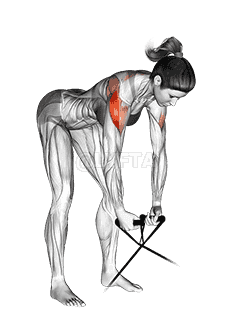
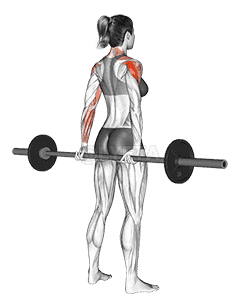
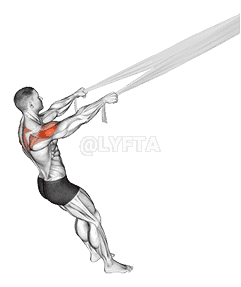
Band reverse fly
Band reverse fly demonstration
Performing the: A Step-by-Step Tutorial Band reverse fly
- Keep your arms straight and your wrists firm, then pull the band apart by squeezing your shoulder blades together and extending your arms out to the sides.
- Ensure your back is straight, your core is engaged, and your chest is slightly pushed forward throughout the movement.
- Hold the position for a few seconds, feeling the tension in your shoulders and upper back.
- Slowly return your arms to the starting position, controlling the release of the band, and repeat the exercise for the desired number of reps.
Tips for Performing Band reverse fly
- Correct Positioning: Stand tall with your feet hip-width apart. Hold the band with both hands, arms extended in front of you at chest height. Your palms should be facing each other. Make sure your back is straight and your core is engaged.
- Controlled Movement: As you pull the band apart, move your arms back in a controlled manner, squeezing your shoulder blades together. Ensure you're not using momentum to perform the movement, as this can lead to injury and won't effectively work the targeted muscles.
- Avoid Overextending: Don't pull the band back too far. This can place unnecessary strain on your shoulders and back. Instead, stop when your arms are extended to the sides and in line
Can beginners do the Band reverse fly?
Yes, beginners can perform the band reverse fly exercise. It's a great exercise for strengthening the upper back and shoulder muscles. However, it's important for beginners to start with light resistance bands and focus on proper form to avoid injury. It may be beneficial to have a trainer or experienced individual demonstrate the exercise initially. Always remember to warm up before starting any exercise routine.
What are common variations of the Band reverse fly?
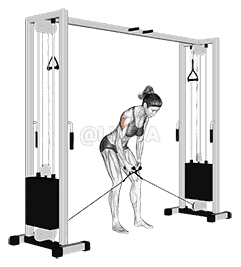
- Cable Reverse Fly: This version uses a cable machine, allowing you to adjust the weight and resistance more precisely.
- Incline Bench Reverse Fly: This variation involves lying face down on an incline bench, which helps isolate the shoulder muscles and prevents using momentum to lift the weights.
- Seated Reverse Fly: This variation is performed while seated, which can help to stabilize the body and focus more on the shoulder muscles.
- Single-Arm Band Reverse Fly: This version involves performing the exercise with one arm at a time, which can help to identify and correct any muscle imbalances.