Band Lunges
Band Lunges demonstration
Watch the demo so setup and tempo are clear before you follow the step-by-step cues.
Performing the: A Step-by-Step Tutorial Band Lunges
Work through the cues in order so setup, bracing, and reps stay consistent before you add load.
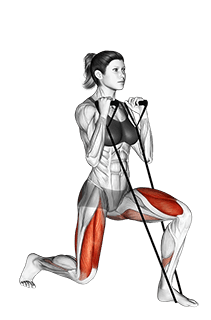
- Take a large step forward with your left foot, bending both knees to lower your body into a lunge position, keeping your back straight and ensuring your left knee doesn't go beyond your toes.
- While in the lunge position, pull the resistance band up to the level of your chest, keeping your elbows close to your body.
- Push through your left heel to return to the starting position, lowering the resistance band back down.
- Repeat this exercise for a set number of repetitions, then switch to the other foot and repeat the process.
Tips for Performing Band Lunges
Form reminders that keep range of motion and control in check once the basic pattern feels stable.
- Maintain Correct Posture: Keep your back straight and your chest out throughout the movement. Many people make the mistake of leaning forward or rounding their back, which can lead to back pain and injury.
- Controlled Movement: Avoid rushing the movement. The key to effective band lunges is slow, controlled movement. This helps to engage the targeted muscles more effectively and reduces the risk of injury.
- Proper Foot Placement: When stepping forward into the lunge, make sure your front knee does not extend past your toes. This is a common mistake that can lead to knee strain and injury. Your back knee should also nearly touch the ground but not rest on it.
- Consistent Tension: To
Can beginners do the Band Lunges?
A short framing note on whether this pattern suits newer lifters before you load it heavily.
Yes, beginners can do the Band Lunges exercise. It's a great way to start building strength and stability in the lower body. However, as with any new exercise, it's important to start with a light resistance band and focus on proper form to avoid injury. If you're unsure about how to perform the exercise, you should seek guidance from a fitness professional.
What are common variations of the Band Lunges?
Compare these progressions when the main pattern is solid or you need a different stimulus with similar equipment.
- Lateral Band Lunges: This involves stepping to the side, which helps to work the outer thigh and hip muscles.
- Banded Walking Lunges: In this variation, you perform lunges while moving forward, which increases the intensity and improves balance.
- Banded Lunge Pulses: Instead of standing up between each lunge, you stay in the lunge position and pulse up and down, increasing the burn in your thighs and glutes.
- Banded Jump Lunges: This high-intensity variation involves jumping to switch legs while in the lunge position, which adds a cardio element and works the fast-twitch muscle fibers.
Related Exercises
Similar library demos that share muscle or equipment focus so you can compare form cues and programming options.