Skip to content

Assisted Pull up

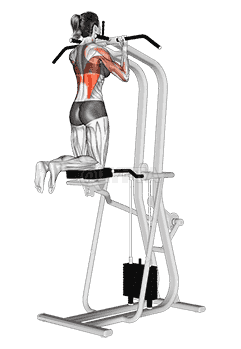
Assisted Pull up demonstration

Assisted Pull up exercise demonstration for Back, Leverage machine

Performing the: A Step-by-Step Tutorial Assisted Pull up

  • Stand on the platform of the machine and hold onto the pull-up handles with your palms facing away from you, keeping your hands slightly wider than shoulder-width apart.
  • Step off the platform, allowing the weight assistance to lift your knees up and suspend your body, ensuring your arms are fully extended but not locked.
  • Pull yourself up by drawing your elbows down towards your sides until your chin is level with or above the bar, keeping your core tight and your body straight throughout the movement.
  • Lower yourself back down to the starting position in a slow and controlled manner, fully extending your arms before repeating the exercise.

Tips for Performing Assisted Pull up

  • **Controlled Movements**: Avoid rushing through the exercise. Make sure to pull yourself up in a slow and controlled manner, and lower yourself down the same way. This not only reduces the risk of injury but also maximizes muscle engagement and strength development.
  • **Engage the Right Muscles**: Ensure that you are using your back, shoulder, and arm muscles to pull yourself up, not just your arms. A common mistake is to rely too much on the biceps, which can lead to strain and injury.
  • **Use Appropriate Assistance**: When using an assisted pull-up machine, make sure to set the counterweight to an appropriate level. It should be heavy

Can beginners do the Assisted Pull up?

Yes, beginners can definitely do the Assisted Pull-Up exercise. This exercise is designed to build strength and help individuals progress towards doing regular pull-ups. Assisted Pull-Ups can be done using a machine at the gym, a resistance band, or even with the help of a workout partner. It's important to ensure proper form to avoid injury. As with any exercise, beginners should start slow and gradually increase intensity as their strength improves.

What are common variations of the Assisted Pull up?

  • Inverted Row Pull-Up: In this variation, you pull yourself up to a bar that's set at waist height, which can help build strength for traditional pull-ups.
  • Jumping Pull-Up: This involves jumping from the ground to give yourself momentum, assisting in pulling yourself up to the bar.
  • Negative Pull-Up: This focuses on the lowering phase of the pull-up. You start in the top position and slowly lower yourself down, which can help build strength and control.
  • Isometric Pull-Up: In this variation, you hold yourself in the top position of the pull-up for as long as possible, which can help improve your strength and endurance.