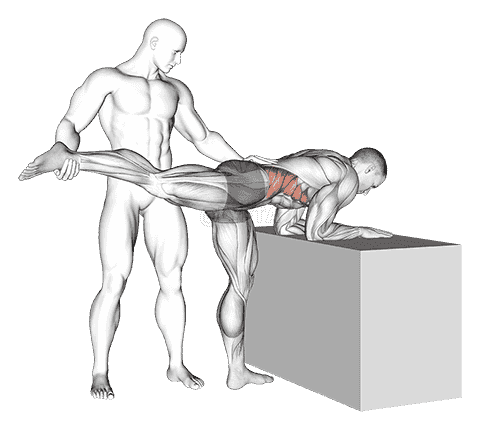
Adductor Longus
Adductor Longus demonstration

Performing the: A Step-by-Step Tutorial Adductor Longus
- Slowly move one foot to the side, keeping it flat on the floor, and bend the knee of the leg that is moved to the side while keeping the other leg straight.
- Lower your body by bending the knee until you feel a stretch in your inner thigh of the straight leg, ensuring your bent knee does not extend past your toes.
- Hold this position for a few seconds to feel the stretch in your adductor longus muscle.
- Slowly return to the starting position, then repeat the exercise with the other leg.
Tips for Performing Adductor Longus
- Controlled Movements: The movement should be slow and controlled, avoiding any jerky or rapid motions. This is essential to prevent injury and to ensure that the muscles are being worked properly. A common mistake is to use momentum to move the weights, which can lead to ineffective workouts and potential injuries.
- Correct Weight: Use a weight that is challenging but manageable. It should be heavy enough to feel resistance but not so heavy that it compromises your form or causes strain. Many people make the mistake of using too much weight, which can lead to poor form and potential injury.
- Full Range of Motion: Ensure
Can beginners do the Adductor Longus?
Yes, beginners can perform exercises that target the Adductor Longus, which is a muscle in the inner thigh. However, it is crucial to start with light weights or resistance to avoid injury. It's also important to learn the correct form and technique to ensure the exercise is effective and safe. Some exercises that work the Adductor Longus include side lunges, seated leg adductions, and standing leg lifts. As always, it's recommended to consult with a fitness professional if unsure about how to perform these exercises correctly.
What are common variations of the Adductor Longus?
- In some individuals, the Adductor Longus may have an additional tendon attachment to the pubic bone.
- There can be a variation where the Adductor Longus is fused with the Adductor Brevis, forming a larger, single muscle.
- Occasionally, the Adductor Longus can be absent altogether, with other adductor muscles compensating for its function.
- In rare cases, the Adductor Longus may be split into two distinct muscles, each with its own origin and insertion points.