Resistance Band Squat
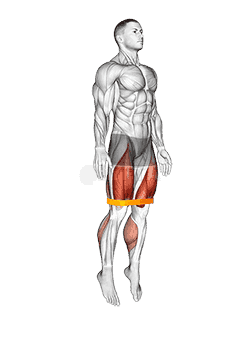
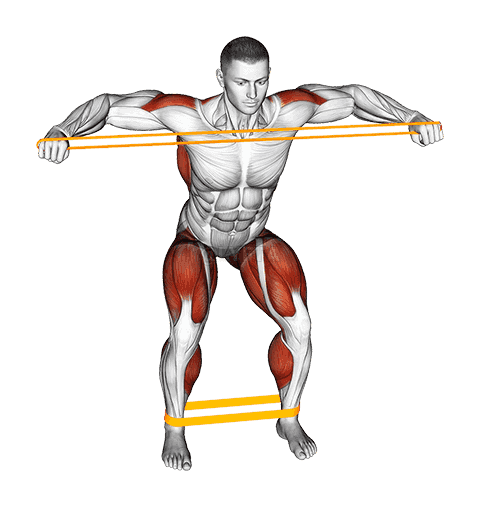
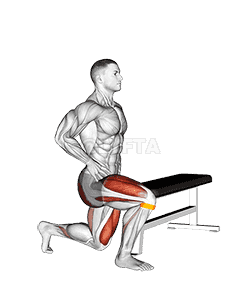
Resistance Band Squat demonstration
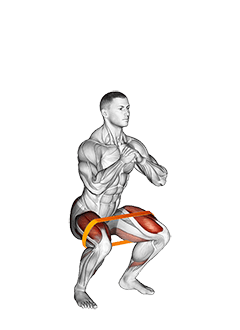
Performing the: A Step-by-Step Tutorial Resistance Band Squat
- Hold the two ends of the band in each hand and pull them up to shoulder height, keeping your palms facing forward and elbows bent.
- Slowly lower your body into a squat position, keeping your chest up and your knees over your toes.
- Pause at the bottom of the squat, ensuring your thighs are parallel to the floor.
- Then, press through your heels to return to the starting position, straightening your legs and maintaining tension on the band.
Tips for Performing Resistance Band Squat
- Maintain Proper Form: Keep your chest up, shoulders back, and engage your core. As you lower into the squat, ensure your knees do not go past your toes, which is a common mistake that can lead to knee injury. Your hips should hinge back as if you're about to sit in a chair.
- Controlled Movements: When performing the squat, the movement should be slow and controlled. Avoid the common mistake of rushing the exercise, which can lead to improper form and potential injury. Instead, focus on the quality of each squat.
- Full Range of Motion: To get the most out of the exercise, aim for a full range of motion. This means squatting down until your thighs are parallel with the floor, then pushing back up
Can beginners do the Resistance Band Squat?
Yes, beginners can definitely do the Resistance Band Squat exercise. It's a great way to start building strength and flexibility. However, it's important to start with a band of appropriate resistance and to learn the correct form to avoid injury. It may be helpful to consult with a fitness professional or watch instructional videos to ensure the exercise is being performed correctly.
What are common variations of the Resistance Band Squat?
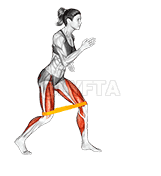
- Lateral Walk Squat: In this variation, you perform a squat and then take a step to the side while maintaining the squat position, working your glutes and thighs in a different way.
- Squat to Row: This variation adds an upper body workout. As you stand from your squat, you pull the bands up to your chest in a rowing motion, working your back and arms.
- Squat with Bicep Curl: This variation involves performing a squat, but as you stand, you perform a bicep curl, adding an arm workout to your squat routine.
- Pulse Squat: In this variation, you perform a traditional squat, but instead of standing up completely, you pulse up and down at the bottom of the squat to increase the intensity and focus on