Glute March
Glute March demonstration
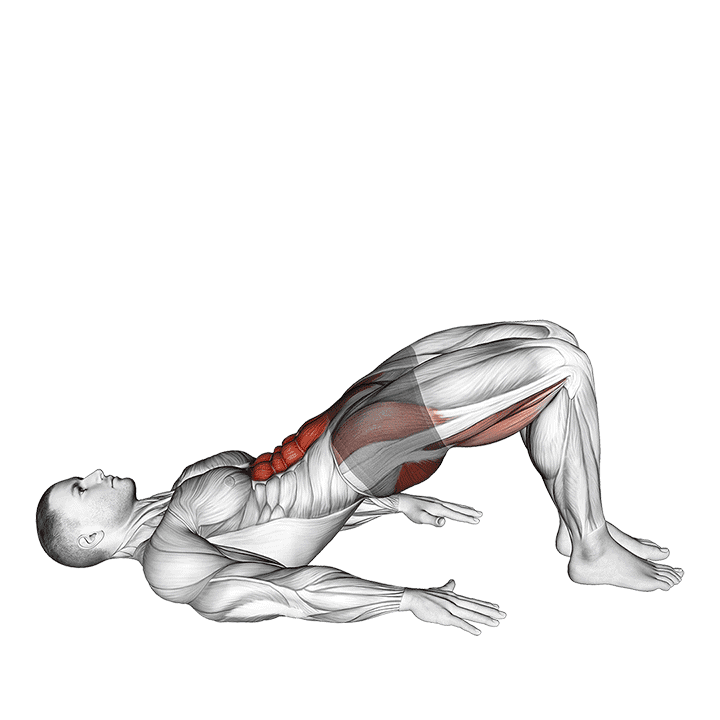
Performing the: A Step-by-Step Tutorial Glute March
- Engage your core and lift both your hips off the ground, creating a straight line from your knees to your shoulders, this is the bridge position.
- In this bridge position, lift your right foot off the floor and bring your knee towards your chest, while keeping your hips elevated and steady.
- Slowly lower your right foot back to the floor and repeat the same movement with your left foot.
- Continue alternating between your right and left foot for the desired number of reps, while maintaining a strong bridge position throughout the exercise.
Tips for Performing Glute March
- **Engage Your Core**: Before you start the exercise, make sure to engage your core. This will help to stabilize your body during the movement and protect your lower back. Common Mistake to Avoid: Failing to engage your core can lead to an over-reliance on your back muscles, which can lead to strain or injury.
- **Controlled Movements**: When lifting your foot off the floor, make sure the movement is slow and controlled. Your foot should rise until your knee is directly above your hip. Common Mistake to Avoid:
Can beginners do the Glute March?
Yes, beginners can definitely do the Glute March exercise. It's a low-impact exercise that primarily targets the glutes, but also works the hamstrings and core. As with any new exercise, beginners should start slowly and focus on maintaining proper form. It may be beneficial to do the exercise in front of a mirror to ensure correct posture and alignment. If any discomfort or pain is experienced, it's important to stop and consult a fitness professional or health care provider.
What are common variations of the Glute March?
- Glute March with Resistance Band: By adding a resistance band around your thighs, you can increase the difficulty and further engage your glute muscles.
- Elevated Glute March: By elevating your feet on a step or bench, you can increase the range of motion and challenge your glutes even more.
- Glute March with Dumbbell: Holding a dumbbell at your chest while performing the glute march adds an upper body and core element to the exercise.
- Plyometric Glute March: This high-intensity version involves adding a jump as you switch legs, increasing the cardiovascular challenge.